Queen Mary.
What would happen if a woman told the truth about her life?

In June 1963 Aurelia Plath was aboard the luxury liner Queen Mary with her Boston University co-worker and very dear friend Ilah Heath, who had paid for their round-trip tickets. They were bound for England, Aurelia’s first visit since her daughter Sylvia’s suicide four months before. Fragile emotionally, financially, and physically, Aurelia packed her carry-on bag with prescription paregoric, Dexamyl, sleeping pills, and an empty bottle of the sedative Miltown that now held an OTC drug. It was Aurelia’s bottle of Miltown -- who else’s could it be?
It was more than kind of Ilah to have bought the tickets, and Aurelia knew it.
Settled in a deck chair Aurelia wrote in her diary, but not about last summer in England when Sylvia caught her husband Ted cheating. What concerned Aurelia now was her motherless grandchildren, ages three and one, in Yorkshire with Ted’s aunt because Ted couldn’t find a nanny.
Ilah, “feeling the swell,” was elsewhere on the ship, trying not to throw up. Aurelia’s diary says, “Hope she’ll get over it & that I’ll remain calm – can’t afford to lose nourishment.”
Alone then, Aurelia wrote about a shipmate sitting nearby:
“Mary McCarthy, author, is on board. Our deck chairs are 3 & 4; hers is #5. Elderly, vital. She works on the ship’s anagram contests daily & won yesterday. Just now clad in raincoat & black velvet beret, she is at her orange anagram list again. Snow white hair, fair tender-looking complexion, faintly crisscrossed with innumerable lines – short nose. Doesn’t hesitate to announce herself as “writer-art critic” or what-not. [Shorthand:] Am not drawn to her. On boat probably this is because of my feeling dual loyalties at present. [Longhand:] So far people don’t speak as we sit in deck chairs. Each is wrapped in his own emotional climate.”
Herself included.
Although Aurelia recognized the name she doesn’t say she’s read Mary McCarthy. Probably she’d heard of her as a scandalous woman four times married, a brutally opinionated writer, pointed and competitive even at leisure, as Aurelia noted. In McCarthy’s deadly nosegay of essays Memories of a Catholic Girlhood (1957), she’d been extraordinarily frank about the cruelty dealt her in childhood, about warped or monstrous family members, and teenage hijinks most women wouldn’t admit to — in prose so exquisite your eyes will water.
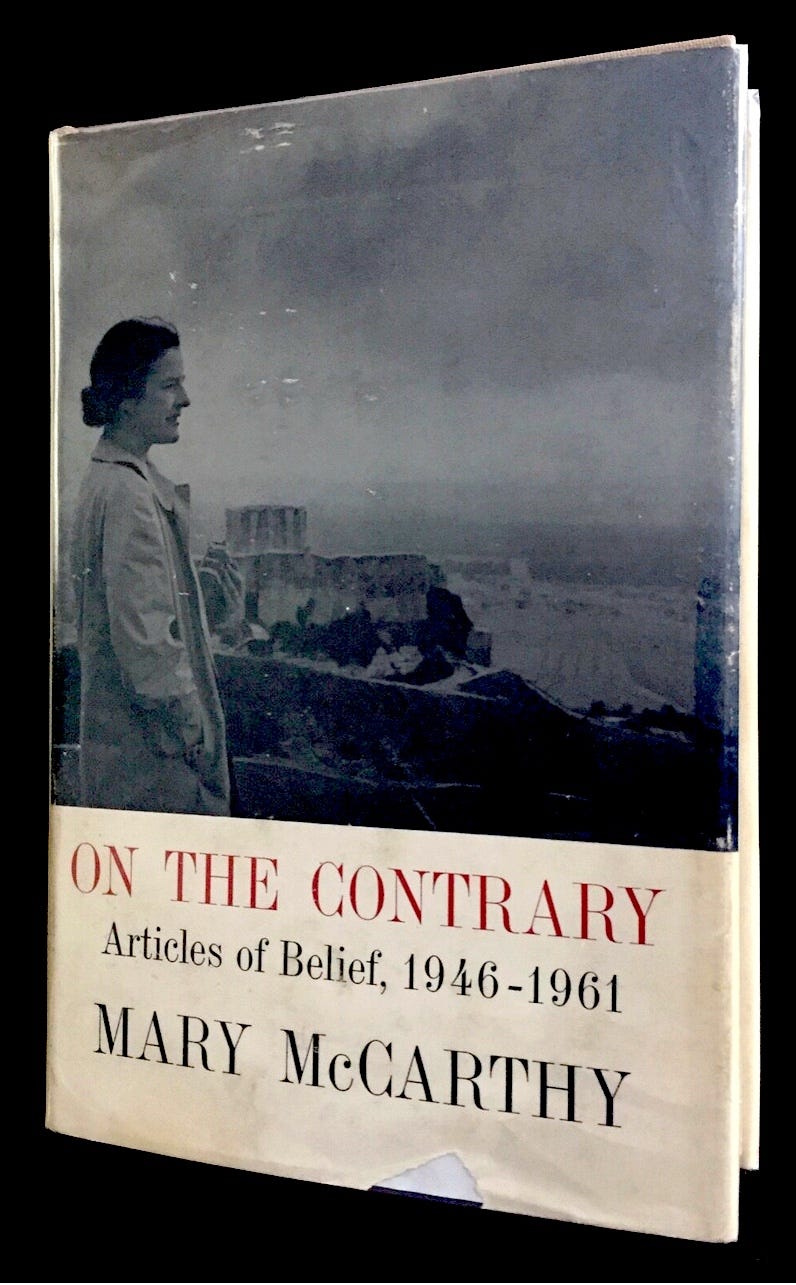
[McCarthy’s latest book at the time (published 1962). She published a book nearly every year.]
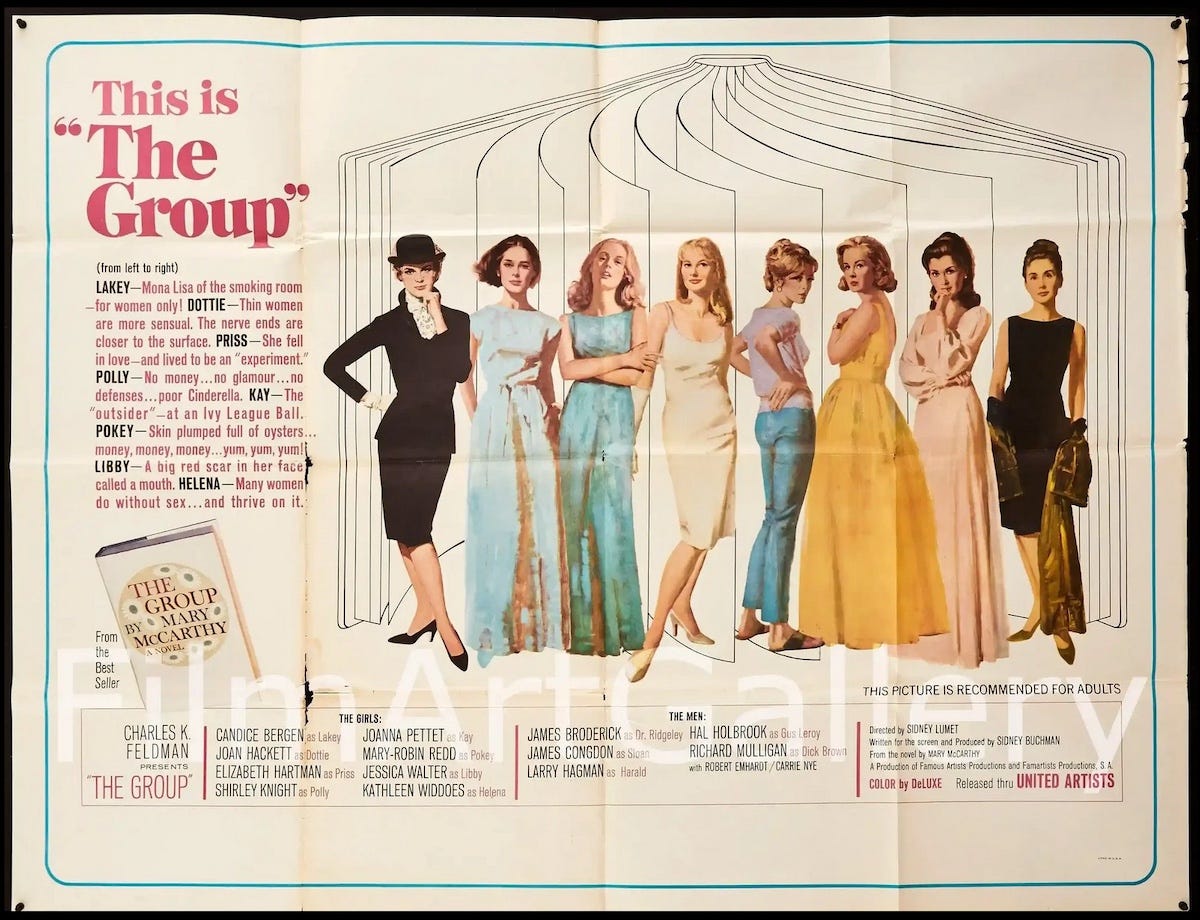
McCarthy’s novel The Group was to be published that August. Maybe on the Queen Mary she was counting down the days. (“Elderly”? McCarthy, born in 1912, in 1963 was 51.) The Group only lightly disguised McCarthy’s friends from Vassar’s class of ’33. They’d variously tried premarital sex, married and divorced, had breast-fed, chased careers, were blacklisted or otherwise disillusioned, and some broke down. The lives of a certain class of women, yet relatable: The Group sold more than a million copies. Was made a movie in 1966.
For a time, McCarthy’s books and Sylvia’s were often taught together.
You have solved a mystery for me. I read Ilah’s name in one of the Yale letters and couldn’t figure it out. (It may as well have been an anagram, which I am also hopeless at.)